Integrated Sustainability: Unifying Light and Acoustics in Modern Interior Design
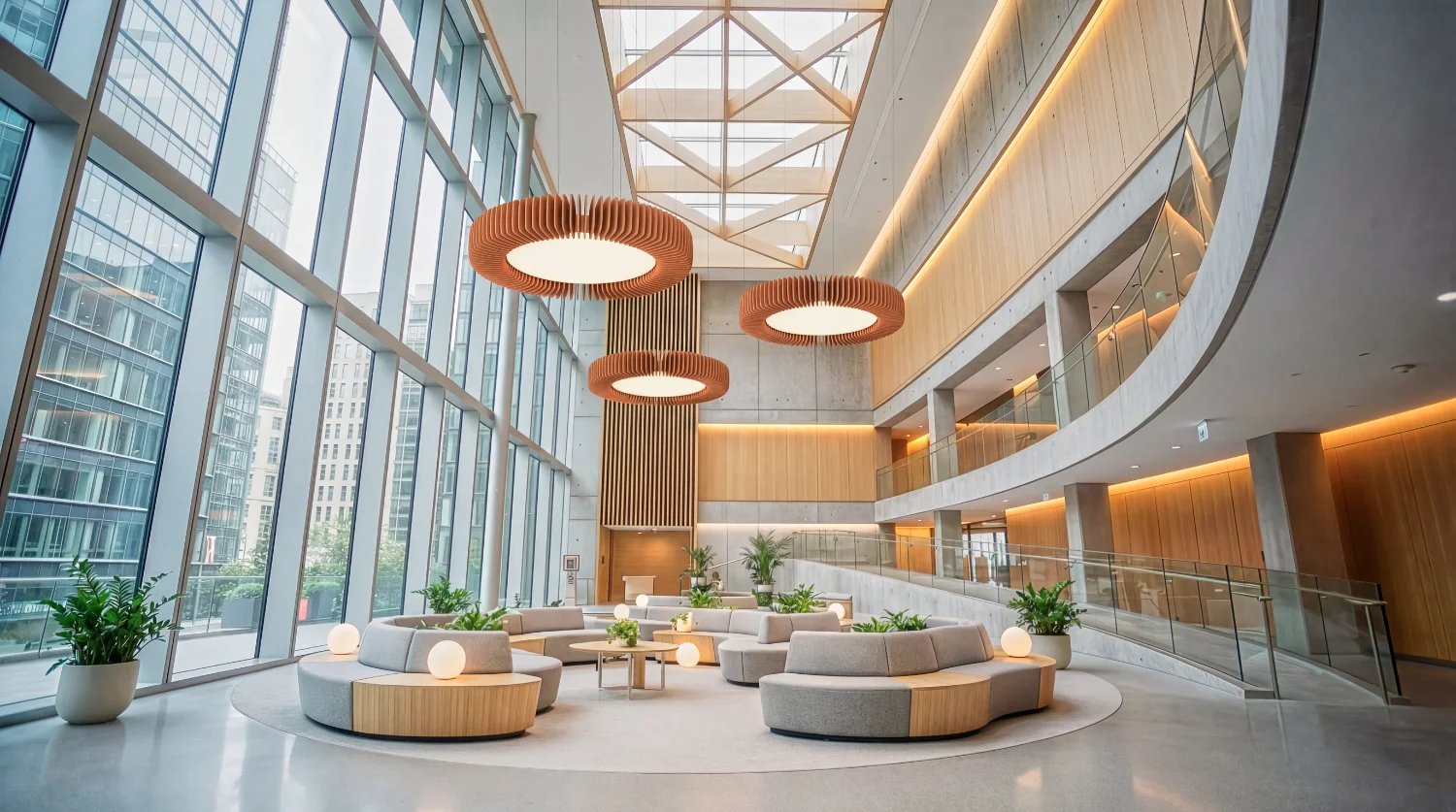
The Shift from Isolated Systems to Environmental Integration
Sustainability in interior architecture is no longer measured solely by lighting power density or recycled material contents. Instead, it is increasingly defined by how intelligently building systems are integrated.
Modern open-plan interiors, characterized by exposed ceilings, minimal finishes, and flexible spatial planning have revealed a critical imbalance. While these environments support adaptability and daylight penetration, they often generate excessive reverberation, visual discomfort, and increased operational energy demand.
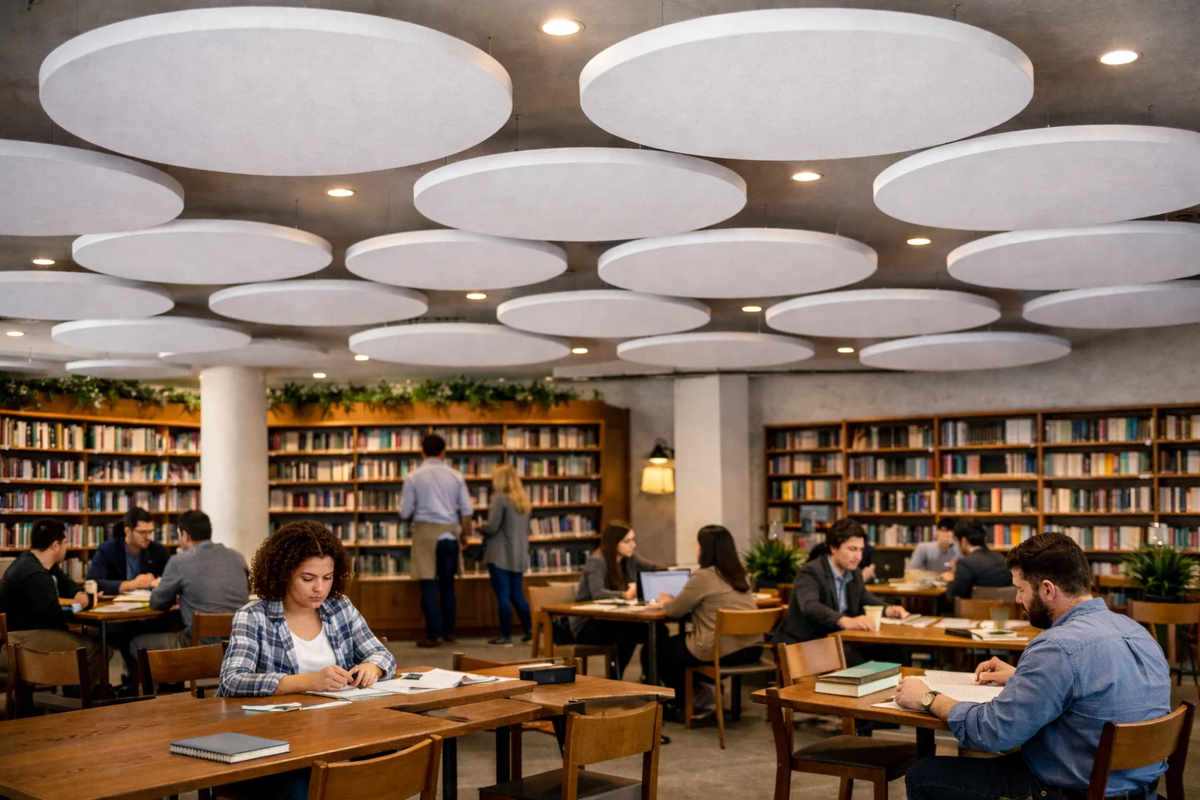
Traditionally, lighting and acoustics have been addressed independently:
- Luminaires deliver illuminance and visual hierarchy.
- Acoustic panels mitigate reverberation and speech distraction.
This fragmented approach results in duplicated materials, additional ceiling congestion, higher embodied carbon, and complex coordination.
Integrated sustainability challenges this separation:
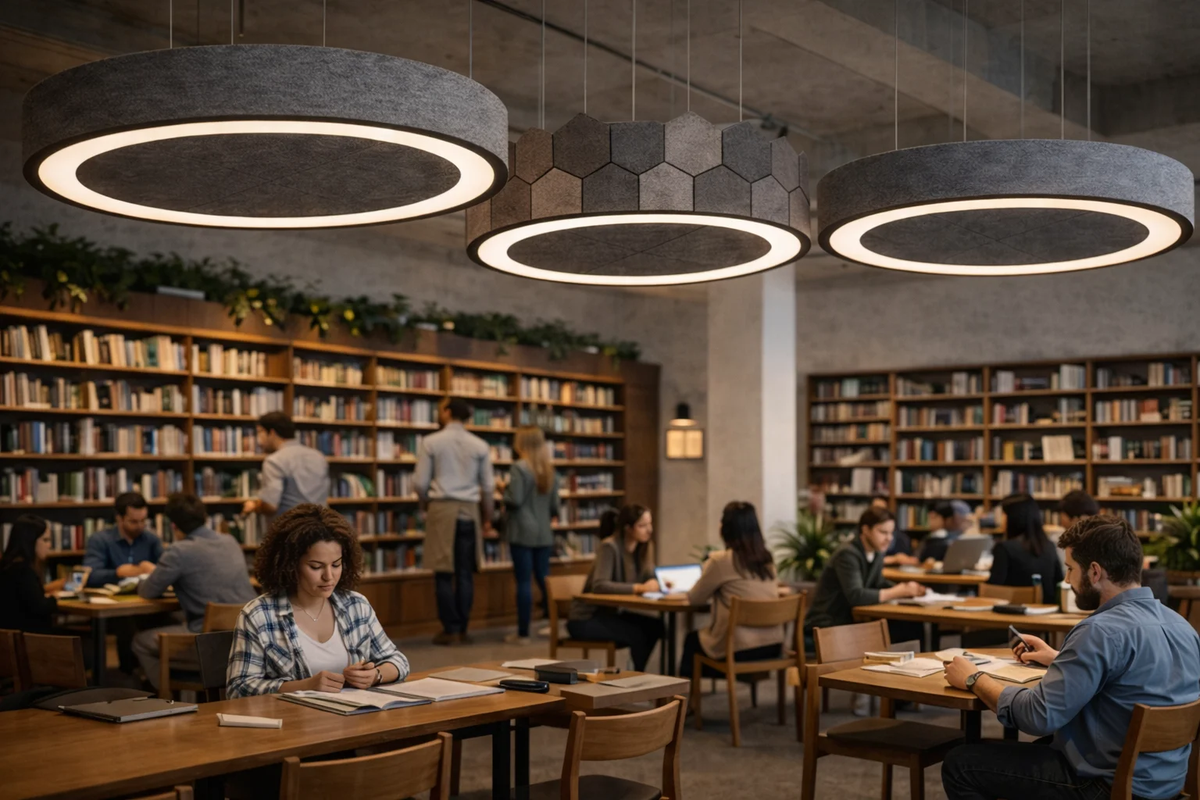
By merging luminous and acoustic performance into a unified architectural system, designers can reduce material intensity, optimize energy use, and enhance occupant well-being simultaneously.
Sustainability as Systems Thinking: A Holistic Approach
True sustainability is not additive; it is systemic.
Rather than optimizing individual components, systems-based sustainability evaluates environmental impact across the entire life cycle of materials and assemblies. It considers:
- Embodied carbon at production stage
- Operational energy performance
- Thermal behavior
- Material recoverability
- Human comfort metrics
The concept of "holistic illumination" represents this new paradigm, where the delivery of light is considered alongside the management of sound to create spaces that support human health, safety, and welfare.
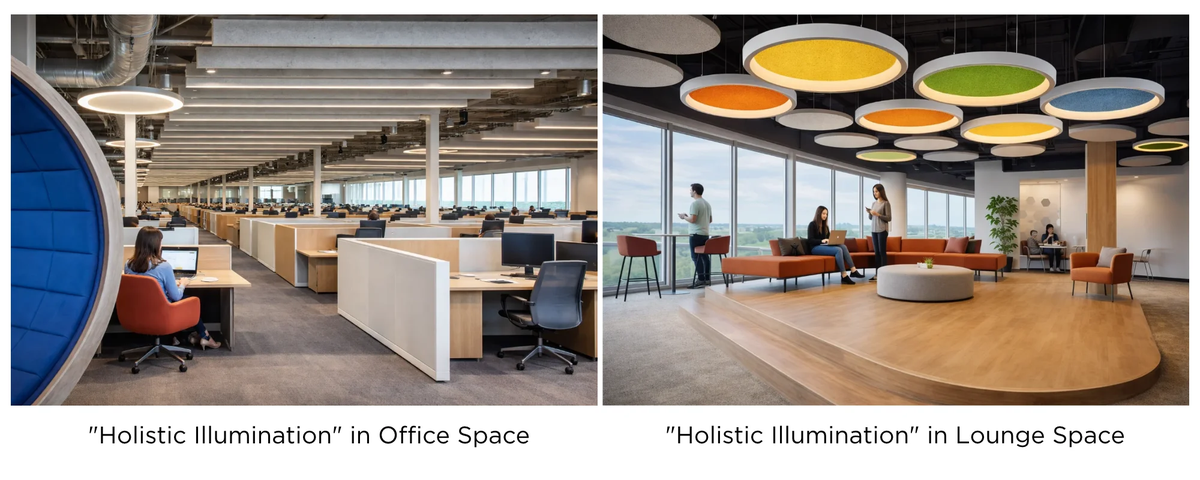
What follows in the next sections demonstrates how sustainability is achieved by integrating lighting and acoustic solutions:
Life-Cycle Approach and Embodied Impact Reduction.
Sustainability doesn’t start when the lights turn on - it begins when materials are extracted.
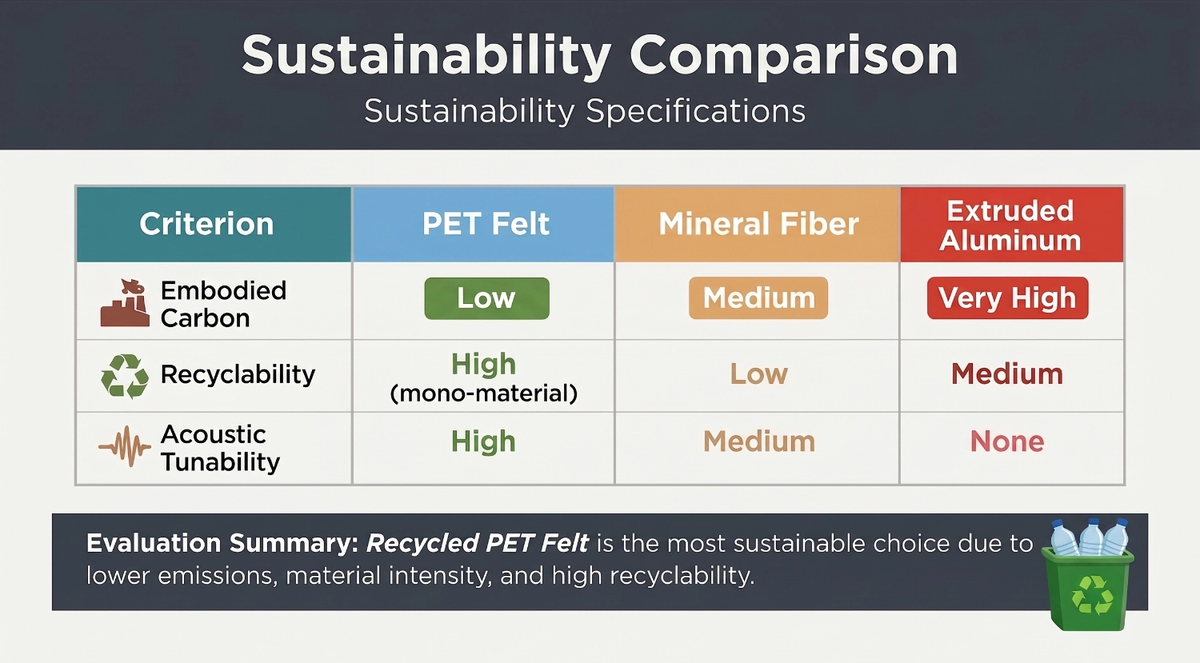
Traditional luminaires rely heavily on aluminum housings and mineral fiber composites; both energy-intensive to produce. In many cases, the largest carbon footprint of a lighting system occurs before it ever reaches the job site.
Acoustic Lighting Systems take a different approach. By replacing heavy, high-impact materials with recycled polyethylene terephthalate (PET) felt, ALS reduces embodied carbon at the source. Instead of installing separate luminaires, acoustic panels, and mounting systems, integrated solutions combine all functions into one streamlined system.
The impact is significant:
- Lower production emissions
- Reduced material intensity
- Greater recyclability at end of life
- Elimination of unnecessary components
Dematerialization Through Functional Integration
Sustainability is not only about using better materials.
It is about using fewer of them.
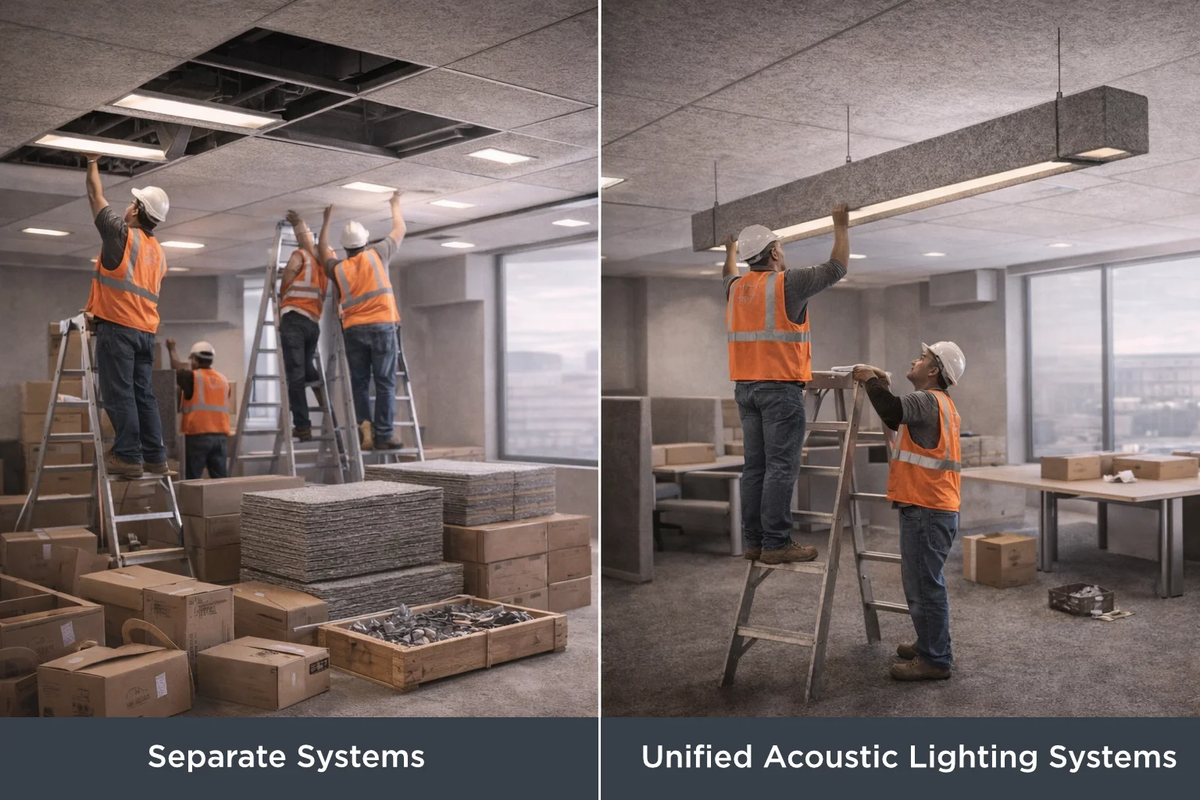
Dematerialization means reducing material and energy intensity while maintaining or even improving performance. In traditional interiors, lighting and acoustic control are treated as separate systems. Each requires its own fixtures, panels, hardware, coordination, and maintenance. More components mean more material extraction. More transportation. More installation labor. More long-term complexity. Acoustic Lighting Systems approach this differently.
By combining illumination and sound absorption into a single architectural element, ALS eliminates redundancy. Instead of layering systems, it consolidates them. The result is fewer materials, fewer mounting assemblies, and a simplified ceiling strategy.
This is sustainability through efficiency of design, not through addition, but through reduction. Dematerialization is not about sacrificing performance. It is about achieving more with less.
Circular Economy and Material Recoverability
Sustainability does not end at installation.
It extends to what happens next.
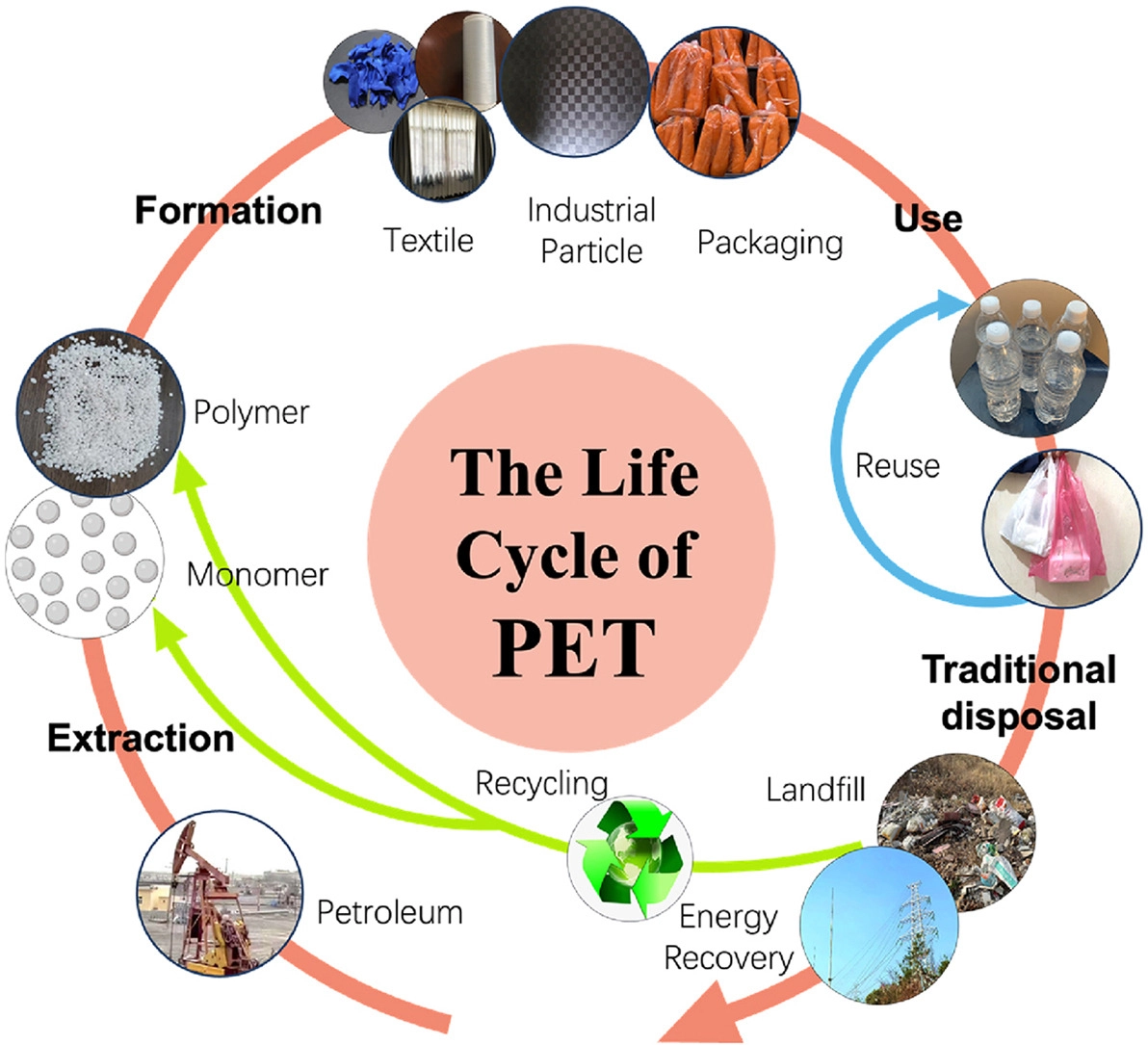
Traditional interior systems are often difficult to disassemble, recycle, or repurpose. Composite materials, bonded layers, and mixed components frequently end up in landfills at the end of their service life.
Acoustic Lighting Systems support a different model; one rooted in circular design.
By utilizing recycled PET as a primary material, ALS transforms post-consumer waste into long-lasting architectural elements. Because PET felt can be manufactured as a mono-material component, it allows for easier mechanical recycling at end of life compared to layered or fiberglass-based acoustic products.
Designing for recoverability changes the role of materials in architecture. Products are no longer temporary installations; they become part of an ongoing material cycle.
Integrated systems that prioritize material clarity and recoverability move interior design closer to a closed-loop future.
Operational Energy Efficiency and Passive Performance
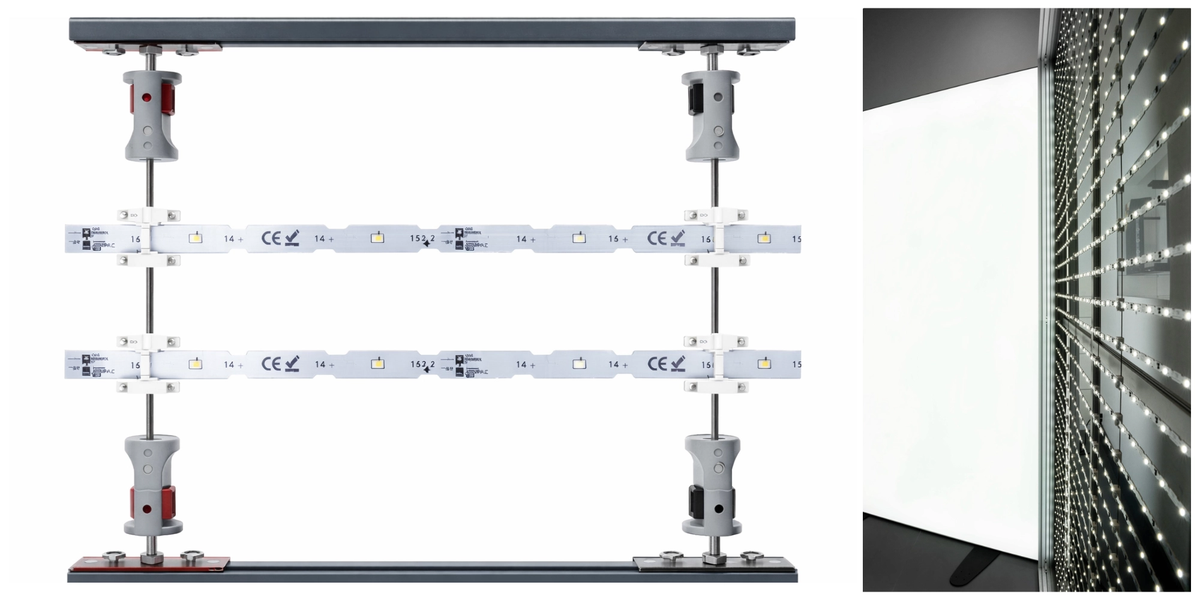
Energy efficiency is not only about wattage; It is about how intelligently a system performs over time. Acoustic Lighting Systems integrate high-efficacy LED sources capable of meeting low lighting power density requirements while maintaining visual comfort and uniform illumination. Yet combining lighting with acoustic materials introduces a technical challenge: Acoustic felt is inherently insulating, which can restrict heat dissipation from LEDs.
So, Thermal management becomes critical.
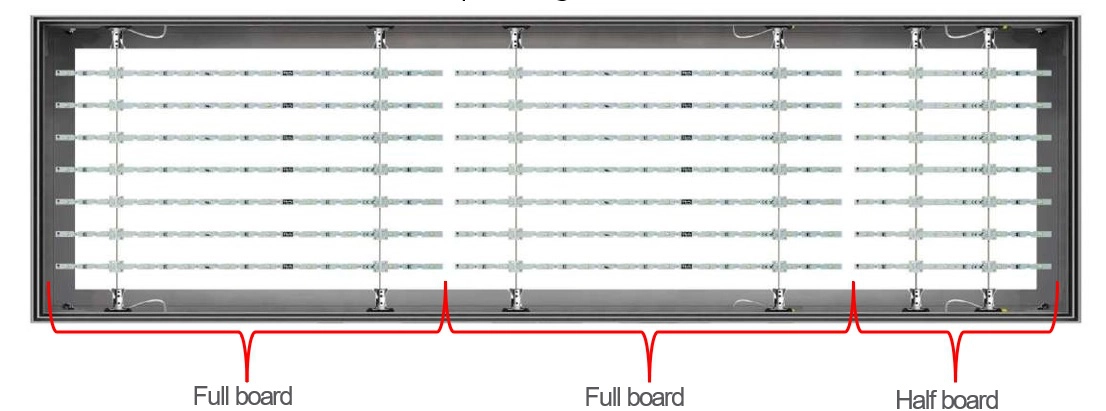
TLS Architectural Lighting addresses this through a substrate-free approach to passive convective cooling. Instead of relying on heavy heat sinks, LED strips are suspended on tensioned cables, allowing air to circulate freely around the light engine. By eliminating unnecessary backing layers and distributing smaller LEDs across a larger surface area, the system reduces thermal resistance and avoids concentrated hot spots.
Passive performance, when done well, is often the most sustainable solution of all.
Human-Centered and Social Sustainability
Sustainability is not only environmental; It is human.
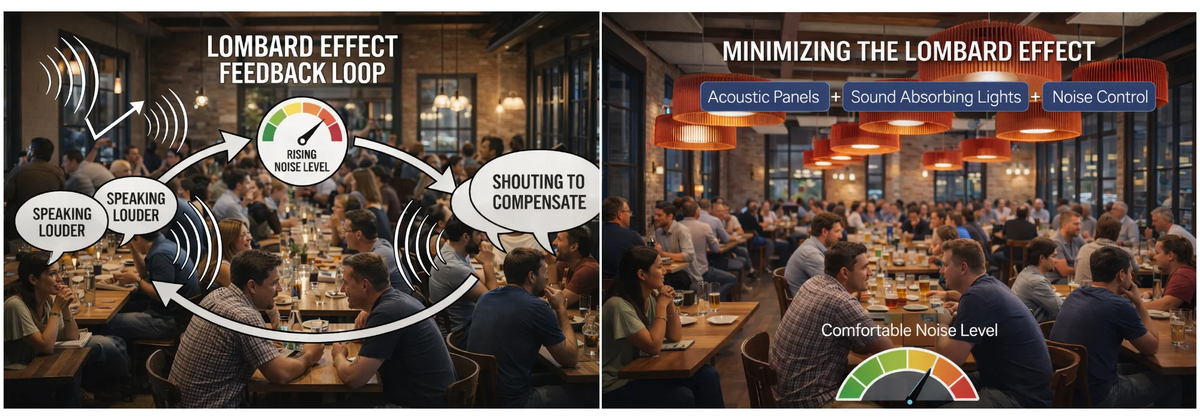
In open-plan interiors, excessive reverberation and background noise can reduce concentration and increase fatigue. As noise levels rise, occupants instinctively speak louder to be heard, a response known as the Lombard Effect. This reaction can escalate sound levels further, creating a cycle of acoustic stress.
By integrating sound absorption directly into the lighting system, Acoustic Lighting Systems help reduce reverberation and improve speech clarity, supporting calmer, more focused environments.
Simultaneously, the added depth of acoustic luminaires enhances glare control and visual comfort, reducing eye strain and improving task performance.
By addressing acoustic comfort and visual quality together, integrated systems support occupant well-being alongside environmental performance.
Sustainability, in this sense, is measured not only in energy savings; But in how well a space supports the people within it.
Conclusion
Integrated sustainability is not achieved through isolated improvements, but through coordinated design. By unifying material efficiency, circular thinking, passive thermal performance, and human comfort within a single system, Acoustic Lighting Systems demonstrate how multiple environmental goals can be addressed simultaneously.
The future of sustainable interior design will not depend on adding more components, but on integrating them intelligently.
Sustainable performance begins with integration
Designing an eco-conscious space? Browse the Lumicoustica Collection to download technical specs and source unified acoustic-lighting fixtures for your next project.