Beyond Fixtures: How Intelligent Lighting Control Turns Design Intent into Reality
- Project Location: Cartersville, Georgia
- Object: The Savoy Automobile Museum
- Lighting Partner: TLS – LumiCloud Circa, Linéa Aurora
- Date: 2021
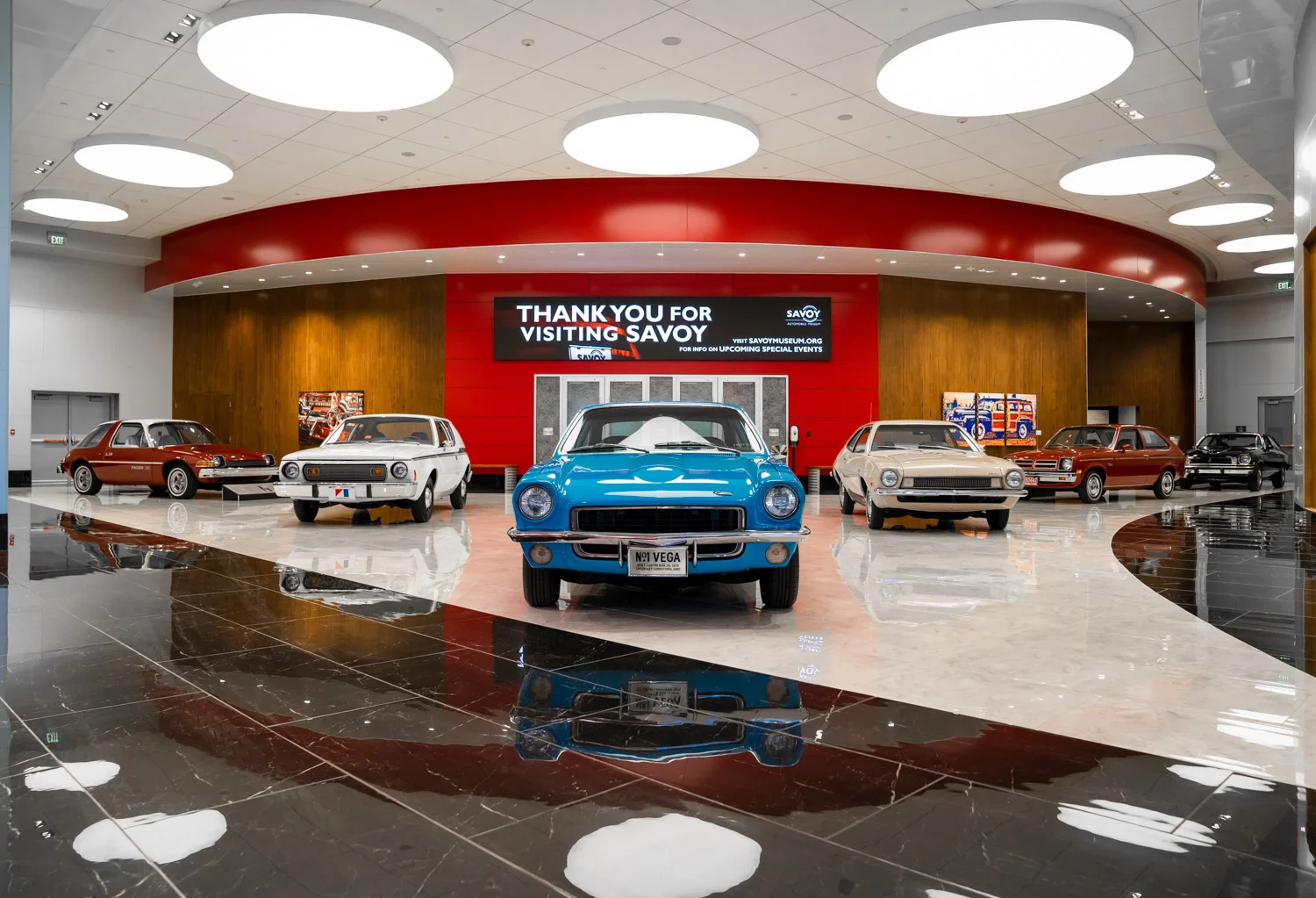
Architectural lighting has reached a turning point. As buildings become more complex and expectations increase, the success of a lighting project is no longer determined by luminaires alone. It is defined by how light is controlled, adapted, and experienced over time.
Today, lighting control is not a backend technical consideration—it is a strategic design layer. When executed well, it protects design intent, enables flexibility, and ensures that architecture continues to perform long after installation.
The Savoy Automobile Museum in Cartersville, Georgia, offers a clear example of how this shift plays out in practice.
“We're using the whole ceiling to light the space. So it's important to have a product that have good qualities and performance. While the other manufacturers have similar products, TLS had the type of products that we would get the proper light levels, but also get quality of the look overall.”
Project Context: Savoy Automobile Museum
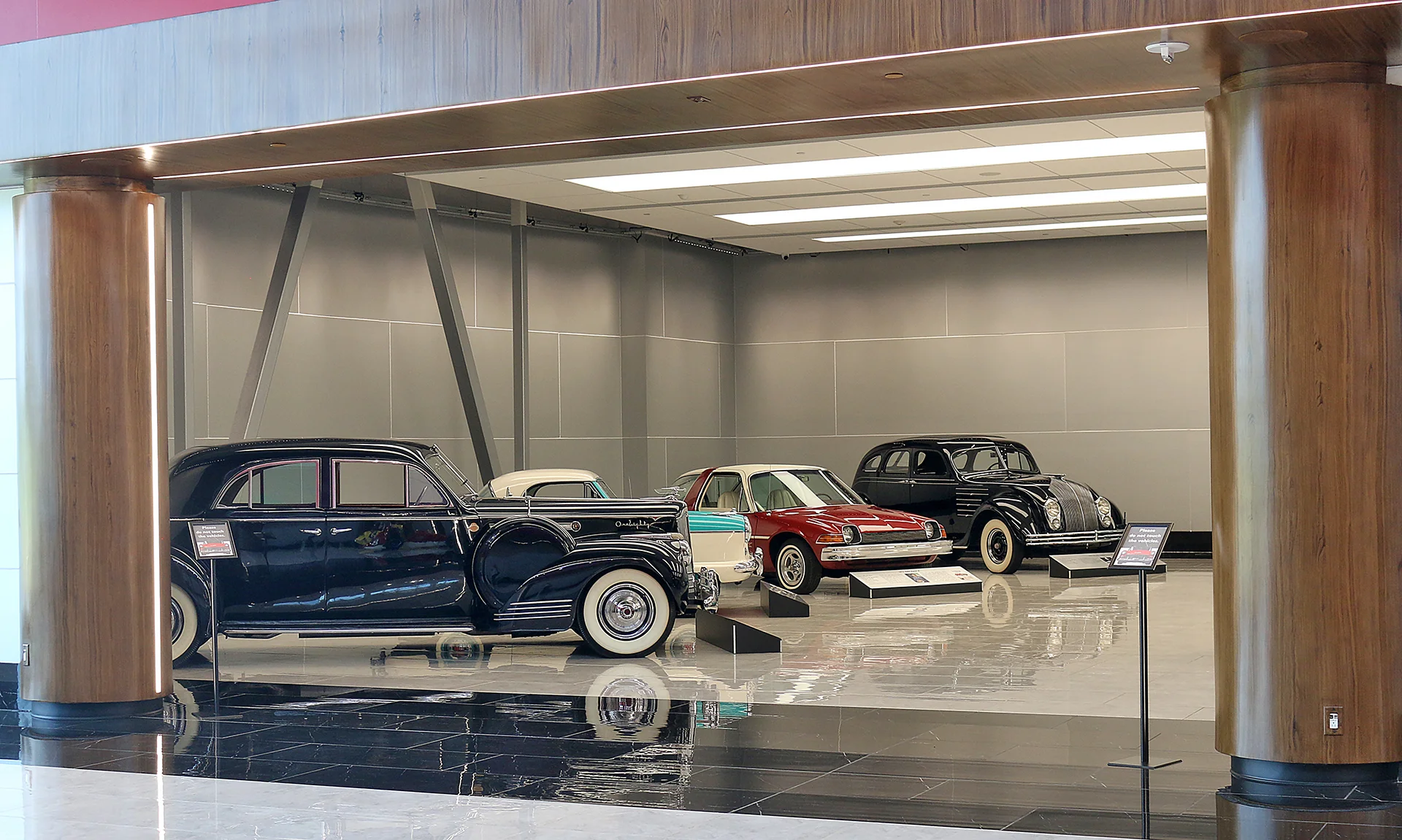
T he Savoy Automobile Museum connects visitors to the cultural and historical diversity of the automobile through rotating exhibits and immersive experiences. Set on a 37-acre site, the museum houses valuable vehicles with highly reflective finishes—placing significant demands on lighting quality and consistency.
For architects and lighting designers, light is now expected to do more than illuminate objects. It must support narrative, reinforce spatial hierarchy, and adapt to changing use scenarios—all without adding visual or operational complexity.
This evolution has elevated lighting control from a technical necessity to a creative enabler. Control systems determine whether a space feels static or responsive, rigid or adaptable.
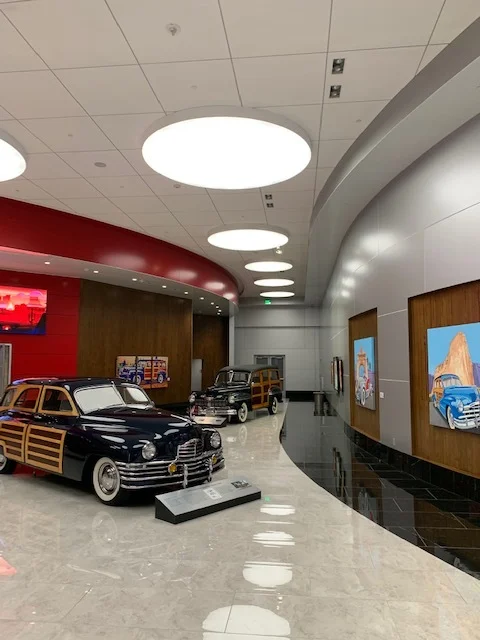
At Savoy, this distinction was critical. The museum was designed to operate as both:
- a daytime exhibition environment, requiring bright, sky-like illumination to showcase vehicles accurately.
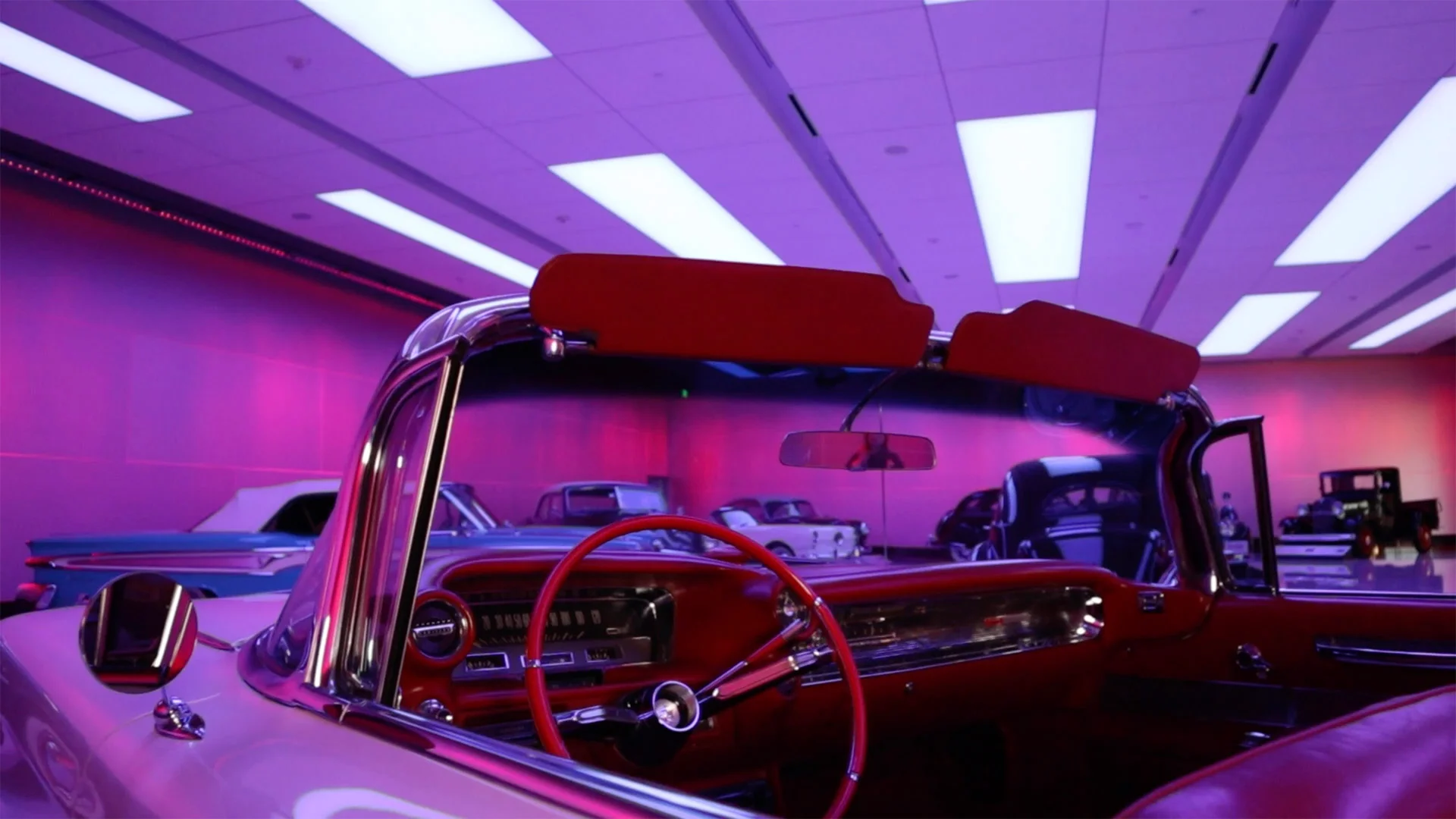
- a dynamic event venue, capable of transforming atmospheres through color and scene changes.
From the beginning, the project team identified three core lighting goals:
1. Uniform, glare-free illumination to properly showcase vehicles.
2. RGBW flexibility for events and special programming.
3. Seamless integration with both linear and curved architectural
ceilings.
Lighting Control as a Design Enabler
Rather than treating lighting control as an add-on, the Savoy project embedded it as a central design decision. TLS was selected specifically for its expertise in smart lighting control and system integration, using the LumiCloud™ Aurora RGBW lighting engine.
The approach prioritized:
- clarity over complexity.
- adaptability over fixed scenes.
- long-term usability over novelty.
This ensured that the lighting system would serve both curatorial intent and operational reality.
Architectural Integration Through LumiCloud™
Two LumiCloud™ configurations were deployed to respond to the museum’s architecture:
LumiCloud™ Linéa · Aurora
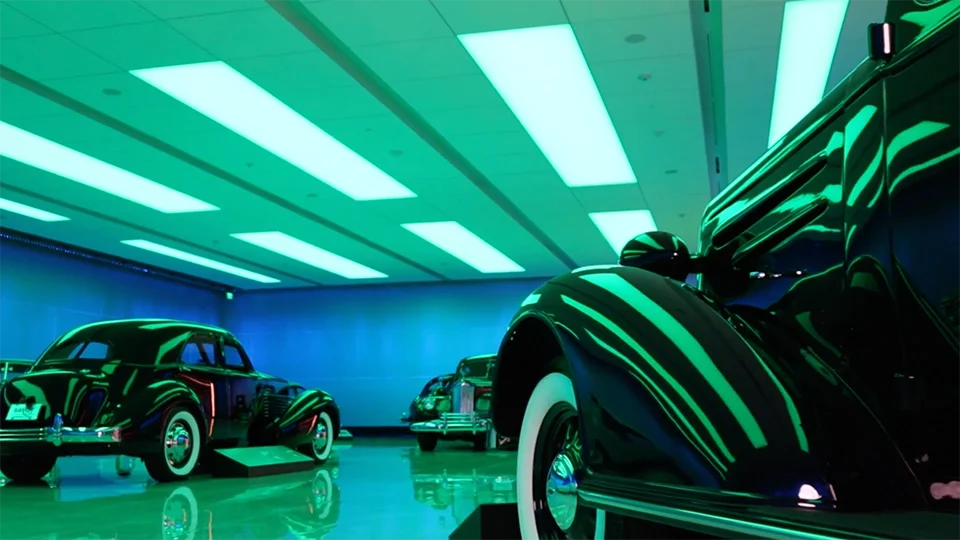
In rectilinear gallery spaces, linear LumiCloud™ Linéa fixtures were suspended flush within
the existing T-Bar ceiling. This created a continuous luminous plane that delivers even,
sky-like illumination across the vehicles, while maintaining a clean architectural ceiling
condition.
Despite the scale of the galleries, the lighting solution remained technically straightforward—focused on delivering correct light levels without visual noise.
LumiCloud™ Circa · Aurora
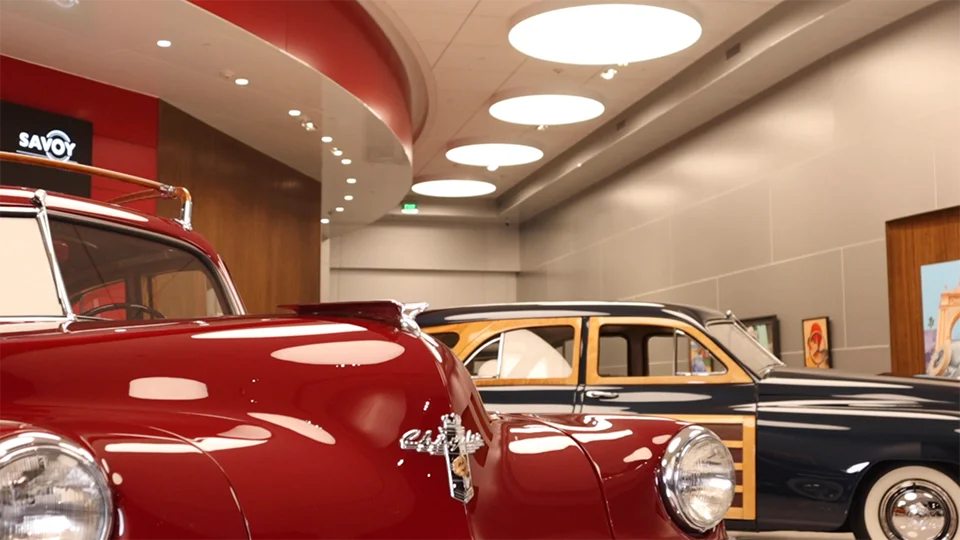
In areas with curved architectural geometry, LumiCloud™ Circa fixtures were introduced.
These circular elements were suspended at varied heights, allowing fixtures to be partially
recessed or subtly expressed below the ceiling plane.
Turning Flexibility into Usability
What distinguishes the Savoy project is not just the availability of RGBW lighting, but how easily it can be used.
TLS’s Aurora control platform enables:
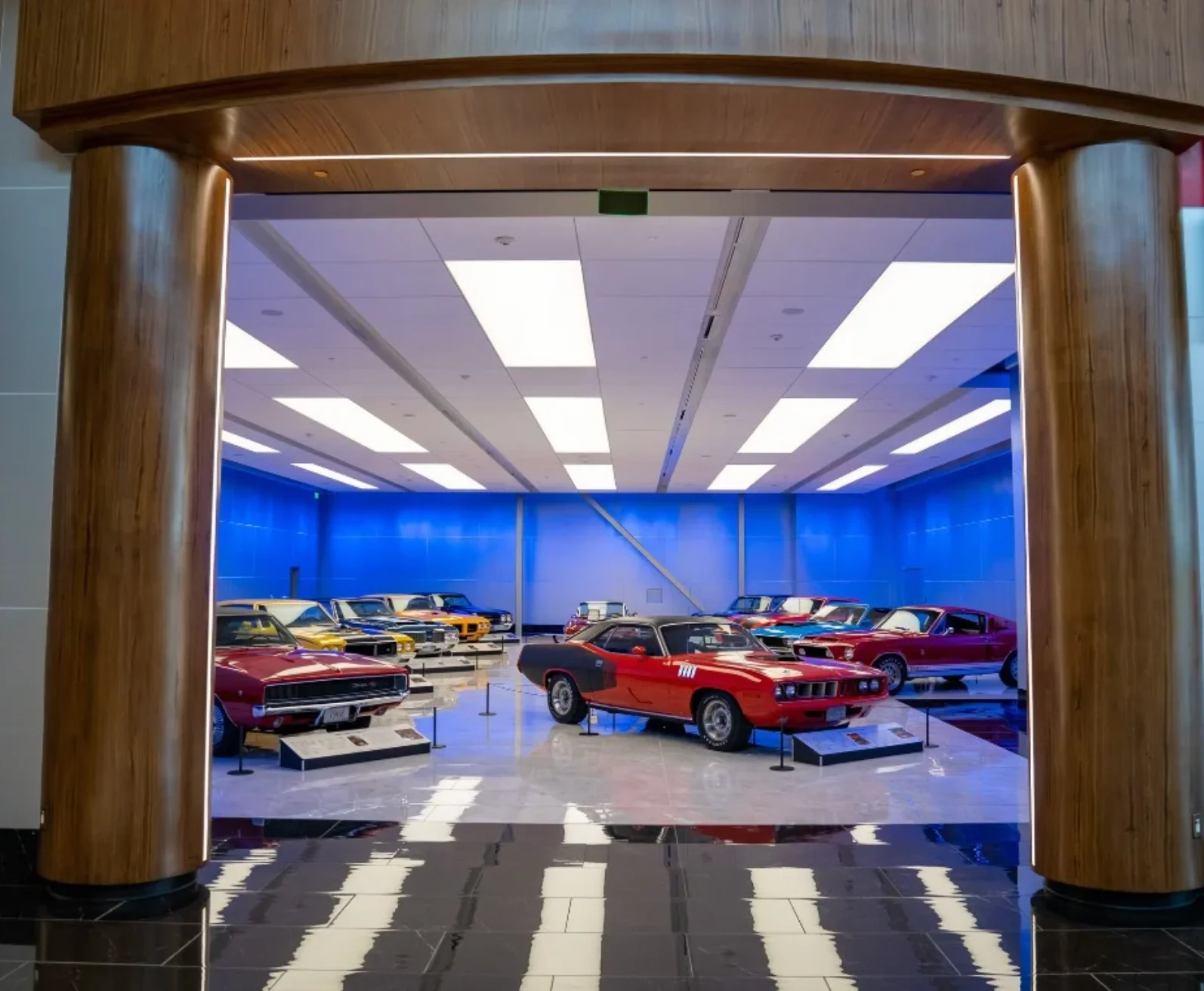
- bright, neutral daytime modes that feel natural and comfortable.
- seamless transitions into event-specific RGB scenes.
- intuitive operation without compromising design integrity.
Lighting scenes support architecture rather than overpower it—allowing the museum to evolve visually without reworking the system.
For lighting designers, this ensures that concepts survive beyond commissioning.
For architects, it preserves spatial intent.
For broker agencies, it reduces risk by delivering a reliable, adaptable control framework.
Sustainability Through Intelligence
Sustainability at Savoy is achieved not through excess technology, but through intelligent control. Adaptive scenes, precise tuning, and reduced over-lighting contribute to energy efficiency while extending system lifespan.
More importantly, the system is designed to evolve with the museum’s programming—avoiding premature obsolescence and unnecessary retrofit.
A Broader Lesson for the Industry
The Savoy Automobile Museum demonstrates a broader truth about contemporary architectural lighting: control is where lighting either succeeds or fails.
When lighting control is treated as a strategic design layer, rather than a technical afterthought, it:
- protects design intent.
- enhances user experience.
- future-proofs architectural spaces.
Conclusion
TThe future of architectural lighting will not be defined by brighter fixtures or more complex products. It will be defined by how thoughtfully light is controlled.
At the Savoy Automobile Museum, intelligent lighting control transformed a complex brief into a coherent, adaptable, and immersive environment, proving that when control is done right, lighting truly performs.