Contemporary Lighting Integration for the Hartwell Memorial Window
- Project Location: The Art Institute of Chicago
- Object: The Hartwell Memorial Window by Tiffany Studios
- Lighting Partner: TLS – LumiGrid Astra
- Date: October 2021

The Hartwell Memorial Window, a monumental stained-glass masterpiece, is now on view at the Art Institute of Chicago. Designed over a century ago by Agnes F. Northrop for Tiffany Studios, the window was commissioned by Mary Hartwell in memory of her husband, Frederick, for the Central Baptist Church of Providence, Rhode Island. It remained there until 2018, when it was relocated to the Art Institute to ensure its long-term conservation and continued public access.
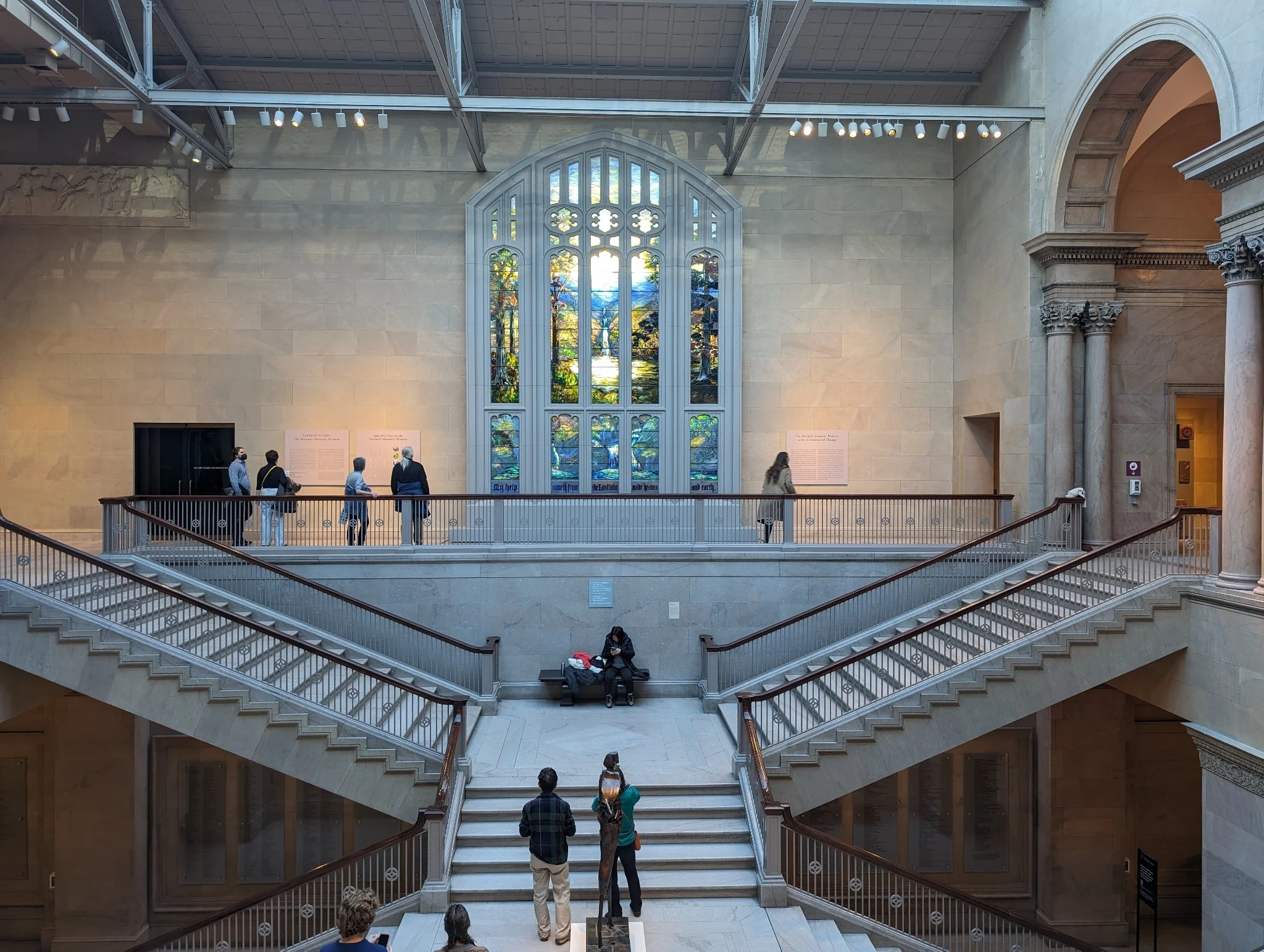
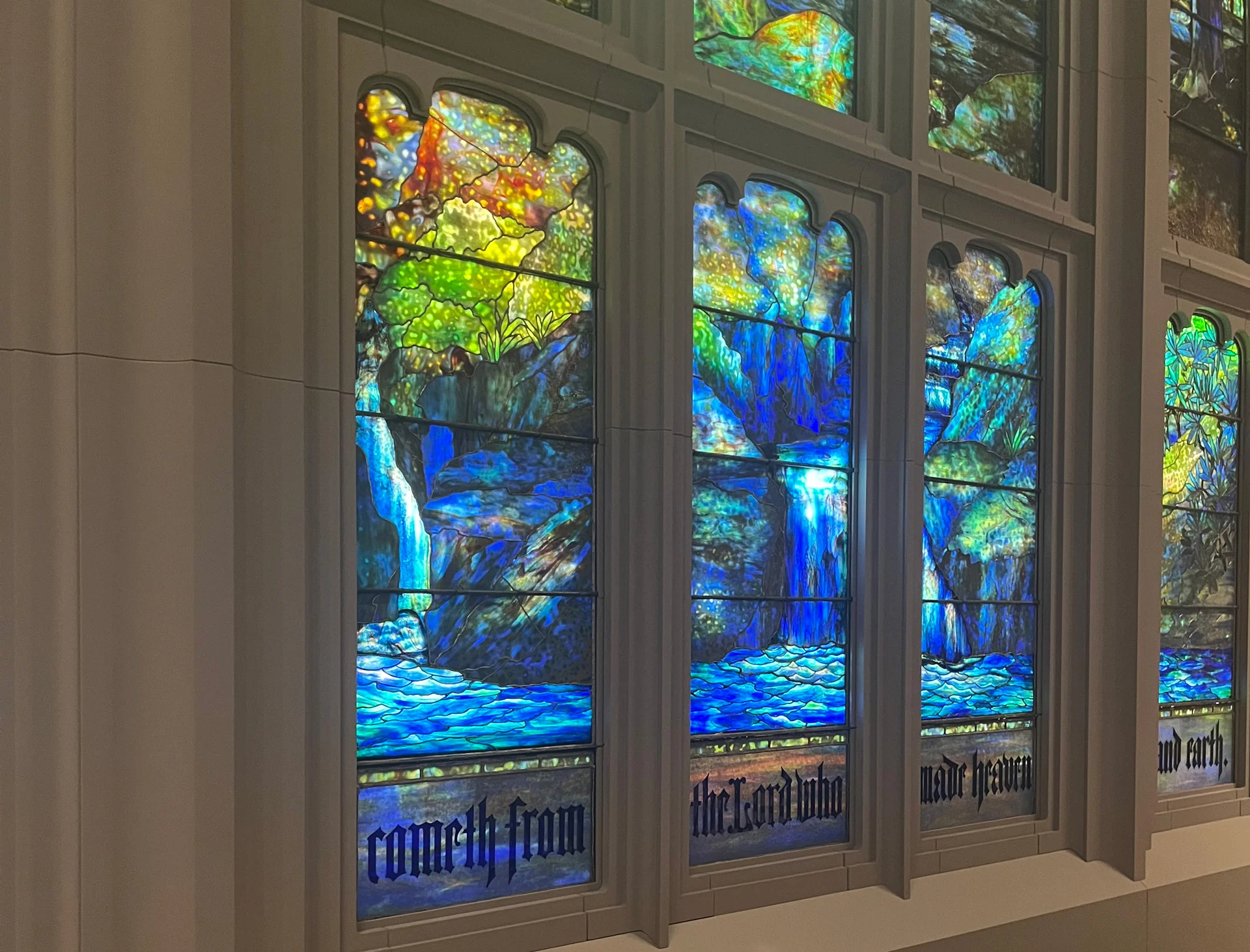
Composed of 48 richly varied glass panels, the window depicts a luminous landscape inspired by the Hartwell family home near Mount Chocorua in New Hampshire, capturing the fleeting beauty of light, water, and nature. Installed in the Henry Crown Gallery atop the Woman’s Board Grand Staircase near the Michigan Avenue entrance, the window welcomes visitors with radiant color and atmosphere.
“I think it's really hard to phathom how large this window is, in an abstract. It is about 25ft high by 16ft wide. So that means this window is in fact as tall as, or even taller than many two story houses in the United States!”
The Situation
The Hartwell Memorial Window is a monumental stained, glass work by Tiffany Studios, installed in a prominent stair hall at the Art Institute of Chicago. While historically designed to be animated by natural daylight, the window’s interior placement and architectural constraints limited consistent illumination.
Traditionally, stained glass is backlit using floodlights positioned at a distance to simulate sunlight. However, the architectural conditions of this site, specifically a restricted depth of only twelve inches behind the window, made conventional solutions impractical .
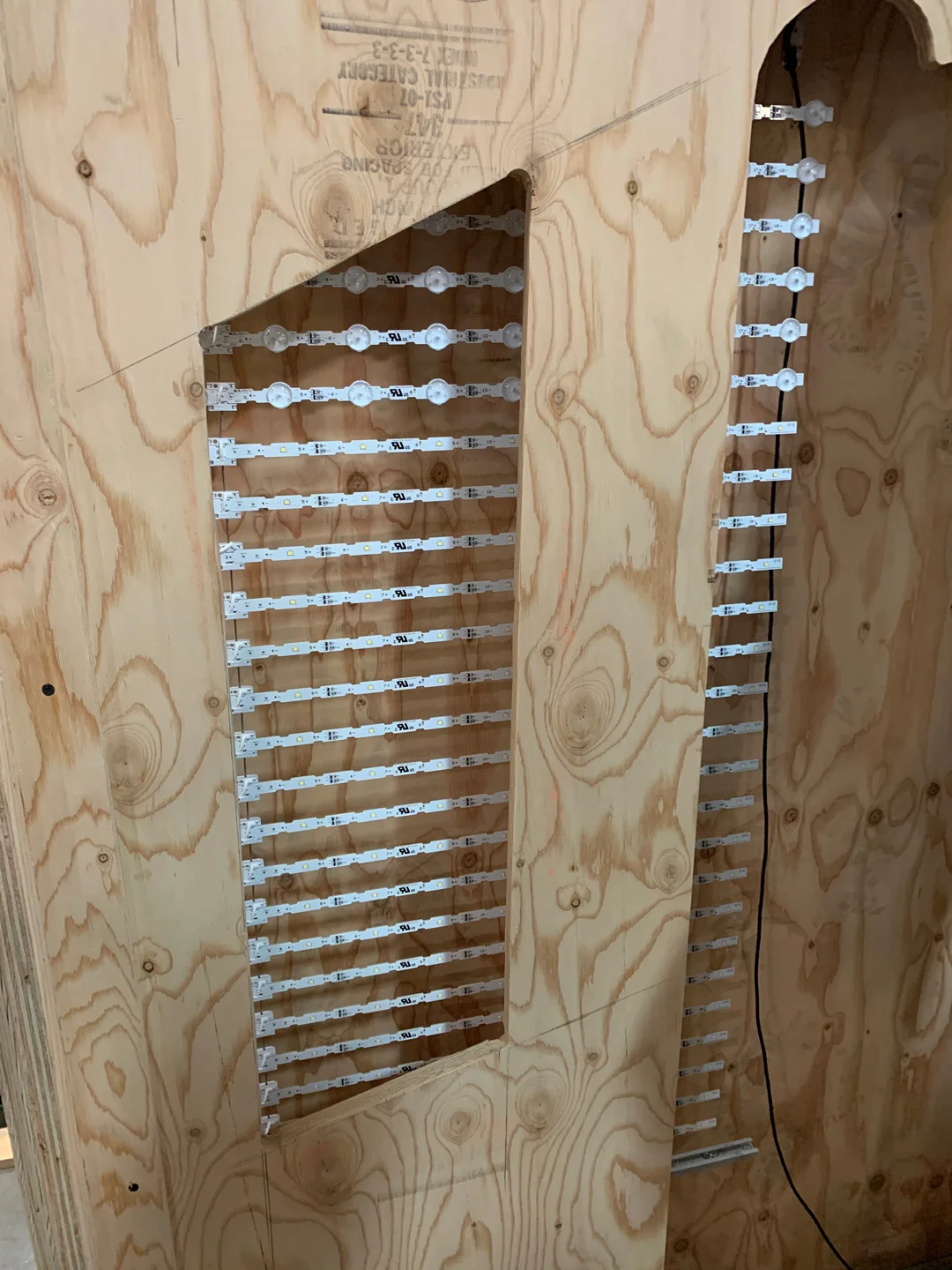
The project faced three interrelated challenges:
1. Spatial Constraint
Only 12 inches of depth were available for any
lighting solution, ruling out standard backlighting systems.
2. Visual Authenticity
The lighting needed to replicate the effect
of daylight without flattening color, distorting tonal variation, or overpowering the glass.
3. Conservation & Maintenance
Any intervention had to respect museum
conservation standards, minimize physical contact with the historic window, and allow for
long, term maintenance access.
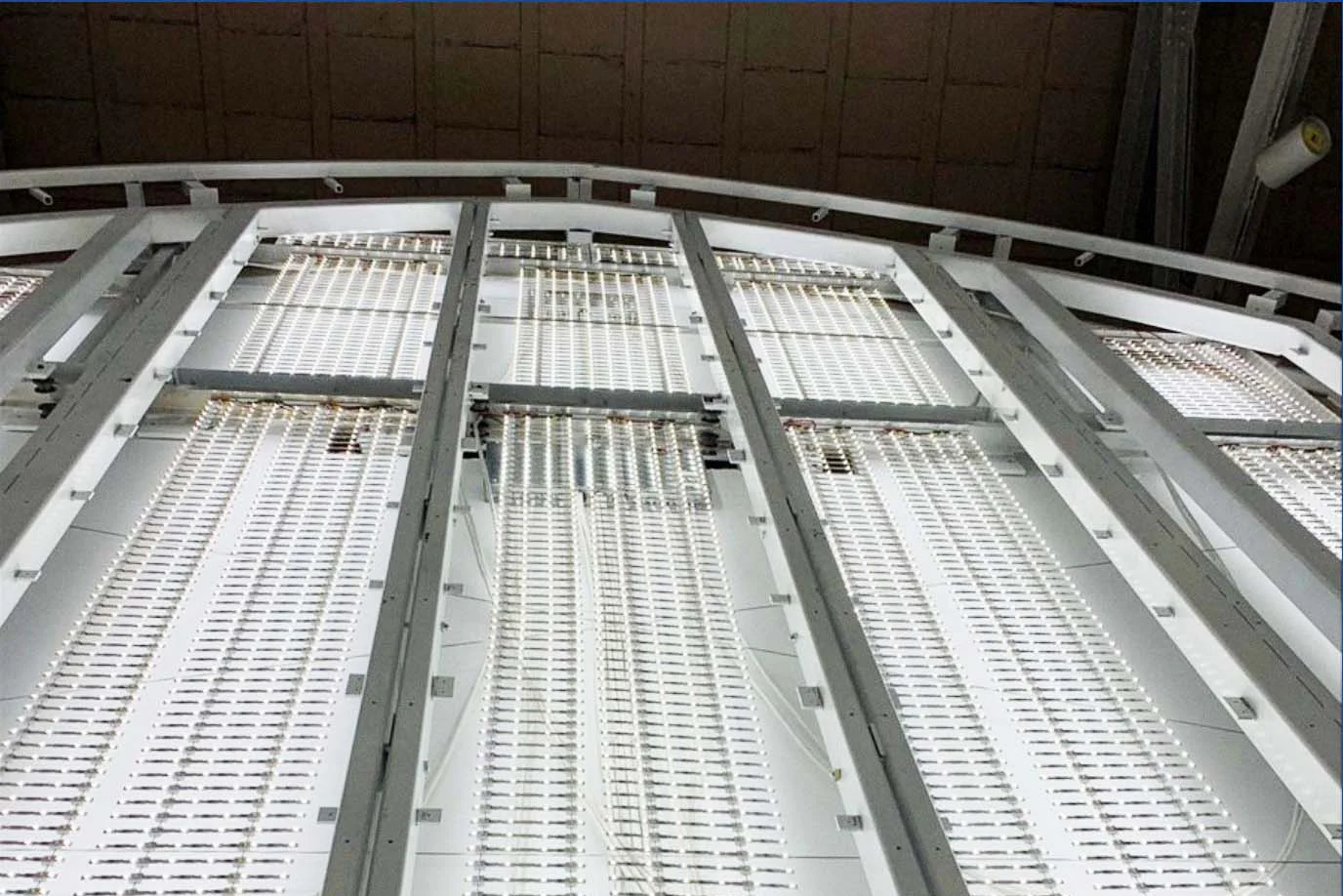
TLS’s LumiGrid Astra Double, Sided system was selected primarily for its
high luminosity
exceeding 1300 lumens per square foot, allowing sufficient brightness within an
extremely
shallow profile.
Key technical characteristics included:
1. Ultra, thin LED grid structure.
2. Even light distribution across large vertical surfaces.
3. No requirement for a backing substrate behind the glass.
Integration Strategy
Rather than mounting lights directly against the window or wall, the system was engineered as a freestanding yet concealed lighting plane:
- Custom engineering drawings document precise alignment with the window’s vertical mullions, ensuring even illumination across figurative and landscape sections.
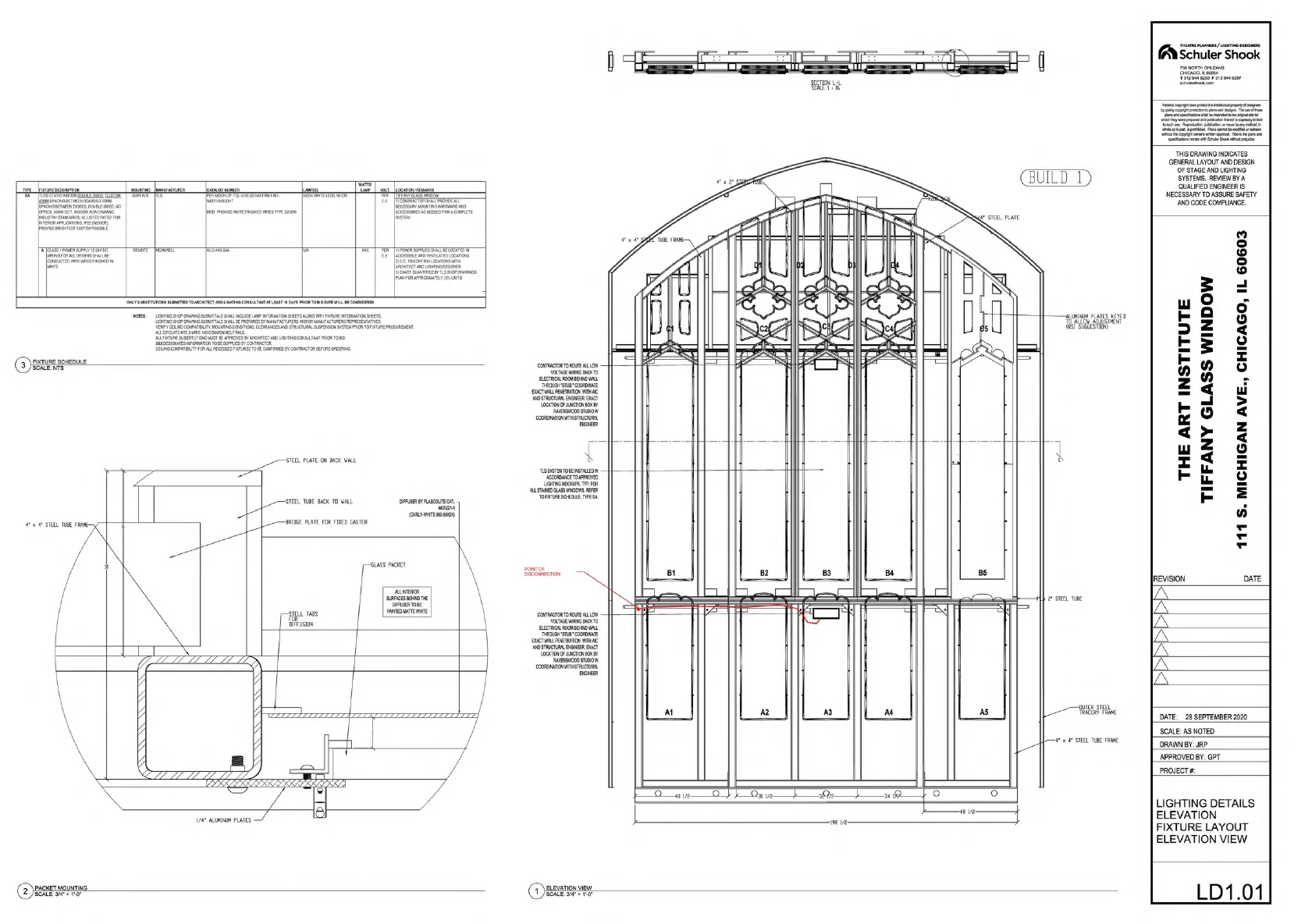
- The LumiGrid was mounted to a retractable C channel rail system, allowing the entire lighting assembly to slide out for inspection or repair without disturbing the artwork .
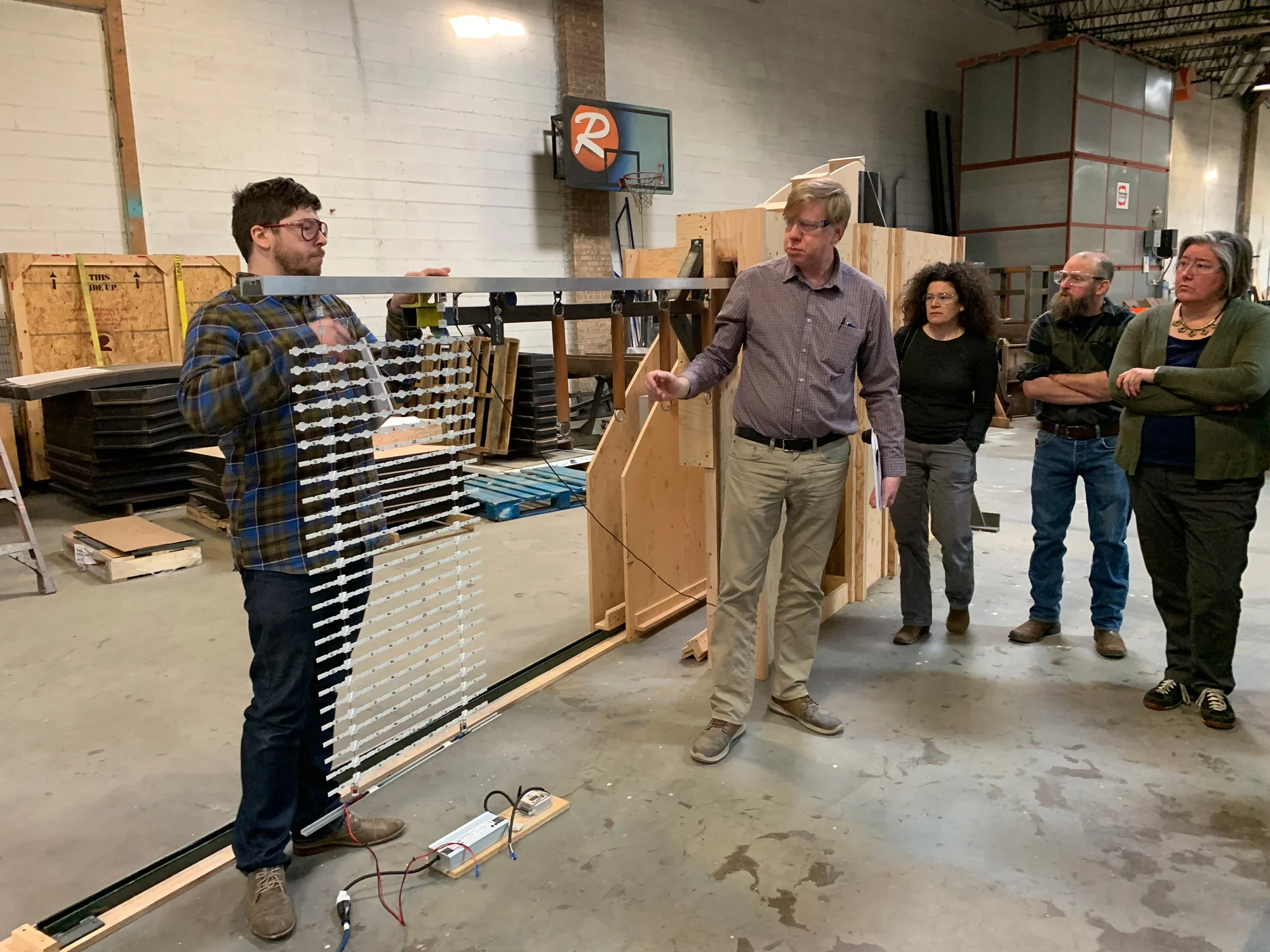
- The absence of a backing substrate reduced weight, heat buildup, and physical stress on the historic structure.
Results
Visual Outcome
- The window appears luminous throughout the day, independent of exterior daylight conditions.
- Color saturation and depth—hallmarks of Tiffany glass—are preserved rather than washed out.
- The lighting remains visually invisible to visitors, maintaining the illusion of natural illumination.
Operational Outcome
- Maintenance staff can access the system efficiently via the slide-out rails.
- The solution meets museum-grade conservation requirements by remaining reversible and non-invasive.
- Energy-efficient LEDs reduce operational costs compared to traditional floodlighting.
Institutional Impact
This project demonstrates how contemporary lighting technology can be successfully integrated into historic museum architecture without compromising authenticity. The Hartwell Memorial Window is now legible, vibrant, and consistently visible, reinforcing its role as both an artwork and a memorial centerpiece within the Art Institute’s circulation space.
Key Takeaways
- Constraint-driven design can produce more elegant and conservation-sensitive solutions.
- High-luminosity, low-profile LED systems enable new approaches to historic stained-glass illumination.
- Maintenance and reversibility should be treated as design requirements, not afterthoughts.
- Successful heritage lighting prioritizes invisibility of technology and visibility of art.
Conclusion
The Hartwell Memorial Window project exemplifies how art history, conservation science, architecture, and lighting technology can converge to renew the life of a historic artwork. Through careful collaboration and constraint-driven innovation, the window continues to illuminate not only the stair hall it inhabits, but also evolving best practices in museum stewardship.